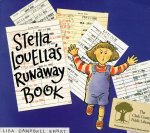
 Stella Louella’s is very concerned because today is the day her book is due at the library, and she cannot find it. She traces the book through the neighbourhood. Each person she meets has enjoyed the book, each for a different reason, and passed it on to the next person in the neighbourhood. By the time Stella arrives at the library she has more than 10 neighbours with her.
Lisa Campbell Ernst, Aladdin Paperbacks, ©2001, ISBN 0-689-84460-3
Write Your Own Cumulative Tale
A cumulative tale is one where at each step in the plot, another character is involved (usually to solve the problem). In Stella Louella’s Runaway Book at each step Stella pursues the last person who had the book, and that person joins in the pursuit until there are move than 10 who eventually arrive at the library.
Give the students some possibilities for writing their own clever cumulative tale. Choose another fairy tale such as:
- The Three Little Pigs and have the pigs searching for something to build the brick house. A sort of “got to get the brick house built in time” plot might be fun, with each person they are visiting contributing something until they have everything they need and all the helpers they need.
- Another possibility might be a school problem where they are looking for the tether ball, for example, and going from one part of the school to the other as they track where it has been before the end of lunch hour.
Vocabulary
This book uses interesting “slang” types of language. For example: willy nilly goes back to the 17th century and means “whether you want to or not”. Other words are smack-dab, simmer down, and tizzy. It might be fun for students to brainstorm as many possible slang expressions as they can think of, with their meanings, and then to incorporate a minimum of 12 into their story. These should be highlighted in their final copy.
For 7 creative writing ideas, click Stella Louells’ Runaway Book to download.
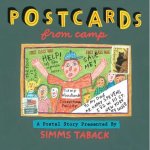 Michael hates camp and informs his father in a series of self-designed postcards of the many trials of his life there. His father returns reassuring postcards until Michael finally comes to love camp.
 Diana Cruchley