
Emperor Ming Da is only nine years old, but he knows his minsters are corrupt. To obtain the money to help his people he convinces his ministers that burlap bags are really magic New Year’s clothes. Honest people will see splendour and the dishonest will see burlap sacks. Fooled, they claim to see the perfection of the clothes, until in the New Year’s parade a boy calls out that they are wearing burlap sacks.
Ying Chang Compestine ©2017, Abrams Books, 978-1-4187-2542-5
Comparison
The story is an obvious variation on The Emperor’s New Clothes as written by Hans Christian Anderson. Read that story to the class, asking them to note as many similarities as they can think of to The Chinese Emperor’s New Clothes. Tell them you are going to introduce them to the SECRET for writing a “good enough” comparison every time.

- List 3-5 ways they are similar.
- List 3 ways they are different.
- Start with a basic introduction, “The Emperor’s New Clothes by Hans Christian Anderson and The Chinese Emperor’s New Clothes by Compestine are variations on the same story…”
- Write your 3-5 ways they are the same. Start with your best example, end with your second best example, put the others between.
- Start with However, the two stories have quite a few differences. Then explain your 3 differences, starting with the strongest, ending with your second strongest, with the other(s) in between.
- Write a conclusion; perhaps your opinion of which is the better version and why.
- Re-write your first sentence to be more interesting. “Without Hans Christian Anderson’s original Emperor’s New Clothes there would have been no version set in China.
The Author
Compestine has had a diverse career including being a food advisor for Martha Stewart. She has also written many children’s books including: The Story of Chopsticks, The Story of Kites, The Story of Noodles, The Runaway Wok, The Runaway Rice Cake, and many more. You can visit the her website here or listen to her life story in this keynote lecture below.

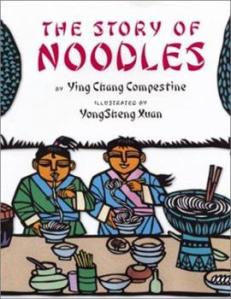
For more creative writing ideas, click on The Chinese Emperor’s New Clothes to download.
 The fisherman in this story is fooled by his three nephews. They persuade him that they will make stone soup, then distract him at each point, in order to add real ingredients to the soup. He is
 Diana Cruchley