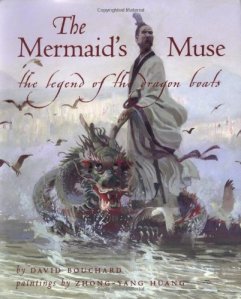
A poet named Qu Yuan, advisor to the King of Chu, is falsely banished to a far off island where the inhabitants really respect his wisdom. A dragon falls in love with him, and changes to a young woman, who asks him to come and live with her under the sea. The villagers assume, when they see him on the dragon, that he is going to be killed and they row out in their boats to save him, banging on the water to scare the dragon, throwing in rice cakes to distract the dragon, and attacking. The dragon refuses to fight back. The poet eventually changes himself into a dragon and says, “Do not believe everything your eyes will tell you.” After that, each year, the villagers celebrate the two dragons, and eventually come to celebrate with their own dragon boats.
David Bouchard, Raincoast Books, 1999, ISBN 9781551922485

Author: Dave Bouchard
Dave Bouchard is a former school administrator and teacher in BC. He has a school named after him in Ontario. He has received the Governor General’s medal and written many books. Three of his books are of Chinese folktales: The Mermaid’s Muse, The Dragon New Year, and The Great Race. Nine of his books reflect his Metis heritage which he discovered as an adult including I am Raven (click for teaching ideas).
Pourquoi Stories: How Things Came To Be
Pouquoi is French for “why”. This is a pourquoi story of how it came to be that there are dragon boat races and festivals around the world. Students could be asked to write their own imaginative, “how it came to be” story. One possibility is how the name of their school came to be, or the name of their town. Another is just an ordinary object such as an orange and how it came to be. Most pourquoi stories have a humorous element.
For example, I went to General Currie Elementary School in Richmond in grade one. We children believed that it was named after an American General (because that seemed more possible than a Canadian General) who had retired in Canada after the American Revolution. As an adult I discovered that he was the first Canadian commander of an all Canadian military division.
Art: Drawing the Dragon
There are many YouTube videos to teach students to draw important Chinese symbols, including the dragon. One I particularly like is How to Draw a Chinese Dragon by Paolo Morrone (below). Be prepared to stop the video at regular intervals so that students can catch up.
For more creative writing ideas, click The Mermaid’s Muse to download.


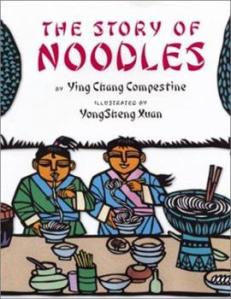

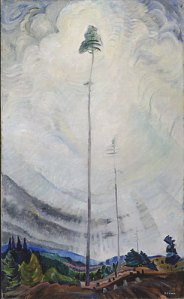


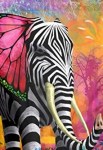 What about an art activity where students combine the features of several animals to create a frankenanimal? An elephant with zebra stripes and butterfly wing ears looks great. You might want to give out some basic animal drawings and some drawings of parts (tusks, horns, claws, patterns, wings, fins, tails, etc.) that they could combine to create their frankenanimal.
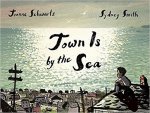 Written in the first person, a boy tells of his simple day. First he describes the setting by the sea with a house, a road, a grassy cliff, the sea, and the town and his father digging coal under the sea. Then getting up, going to the playground, having lunch, doing an errand in town, visiting his grandfather’s graveyard and and going home, listening to the radio, having dinner, An ordinary day, and at every stage he thinks of his father digging coal under the sea.
 In this picture book, based on a Leo Tolstoy short story, our hero Nikolai seeks the answer to his three questions from a series of animals, ending with the wise turtle of the mountain. It is his response to a stranger’s cry for help that leads him to the answer. It’s a simple book based on three questions: What is the right time? Who is the most important one? What is the most important thing to do?

 Diana Cruchley