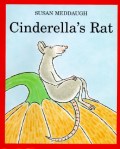
 Cinderella’s Rat is captured in a cage, but is “rescued” by the fairy godmother and becomes the coachman for Cinderella’s trip to the ball. During the ball the coachmen wait, eating in the kitchen. Suddenly, his rat sister appears, looking for him, and to prevent the other coachman from killing him, over hero says she has been enchanted. They take her to a wizard to have her changed back to a girl. The wizard makes several errors and finally creates a girl with the voice of a dog. The happy ending is that the rat’s sister is great at scaring cats away. (More complicated to describe than to read.)
Andrea Cheng, Walker and Co., NY, ©2003, ISBN 0-8027-8831-9
The Generalization Ending
Cinderella’s Rat opens with the following lines: “I was born a rat. I expected to be a rat all my days. But life is full of surprises.” The book ends with the lines: “Now I live in a cottage with my family. Food is plentiful and cats are scarce. Life is full of surprises. You might as well get used to it.”
This is a nice of example of a type of ending which you can teach students. The easiest way is to have them write a series of anecdotes and at the end write what they learned from that experience in a short line. During “RE-VISIONING” they can re-write the opening to create a line representing the life lesson, which they repeat at the end of the tale.
The Rant
Rick Mercer used to provide a RANT on CBC’s This Hour Has 22 Minutes. He has continued on The Mercer Report. He selects a topic and “rant on” in a humorous way about that topic for a period of time. Students writing a rant could choose a fairy tale and then write a RANT complaining about something from the point of view of that character. The example that follows is from the fairy tale Cinderella, from the point of view of the fairy godmother.
For 4 creative writing ideas, click Cinderella’s Rat to download.
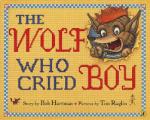 Little Wolf never likes what is made for dinner: Lamburgers, Sloppy Does, Chocolate Moose—nothing pleases him. All he can think about is “boy”—boy chops, baked boy-tatoes and boys -n-berry pie. On the way home to three pig salad, Little Wolf has the idea of pretending to see a boy. After this trick results in him getting junk food for several nights, his father overhears him bragging to a friend. They refuse to listen to him…even though he has seen an entire troop of boy scouts in the woods, and one even enters the cave. Lesson learned, and the boys, at least, live happily ever after.
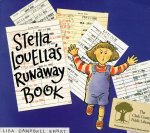 Stella Louella’s is very concerned because today is the day her book is due at the library, and she cannot find it. She traces the book through the neighbourhood. Each person she meets has enjoyed the book, each for a different reason, and passed it on to the next person in the neighbourhood. By the time Stella arrives at the library she has more than 10 neighbours with her.
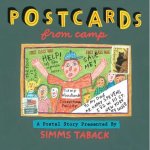 Michael hates camp and informs his father in a series of self-designed postcards of the many trials of his life there. His father returns reassuring postcards until Michael finally comes to love camp.
 Lipman Pike is credited with being the first professional baseball player (then called “base”). This is the story of his childhood, the development of his skills, the aspirations his father had for him, and how he came to be the first “professional” baseball player.
 A great chief of the Pacific Northwest is creating his totem. The animals (beaver, bear, wolf, owl, eagle, frog, killer whale, otter, thunder, and raven) each present a quality that the chief might have that would lend itself to creating his totem. Each tries to persuade him to include them.
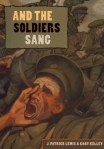 A gorgeous moving story of the Christmas truce during World War I, when both sides left the trenches, sang carols together, exchanged gifts, shook hands, and then went back to killing each other.
 Our illustrator is racing through the book trying to tell the story of a pie-loving king who has imprisoned his stepdaughter. He will only release her when a suitor kills the dragon. We, “the readers”, are reading too fast for the illustrator to keep up. This results in emergency art substations that detour our plot.
 The author’s child learns in school that the Wright Brothers invented flight. Her Brazilian husband says, “No they didn’t. It was Alberto Santos-Dumont”.
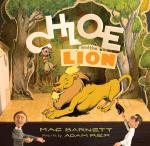 The author begins by presenting us with his character, Chloe, and asks the illustrator to menace her with a lion. The illustrator thinks it should be a dragon, which starts the quarrel. The illustrator torments the author sufficiently that the author fires him, and, in fact the lion the second illustrator creates eats him. Unfortunately, the second illustrator is really bad and finally Chloe and the author agree that they need to apologize to our first illustrator. They phone him, inside the lion’s stomach, and eventually he, the author, and Chloe become reunited.
 Diana Cruchley