 A Chinese Beauty and the Beast Tale
A poor farmer with seven daughters is on his way home from his farm when a dragon seizes him and says he will eat him unless one of his daughters marries him. Seven (who makes money for the family with her excellent embroidery) agrees and they fly away to a gorgeous home, wonderful clothes, a great life…and he reveals he is a prince in disguise. She misses her home, and while there, Three, who is jealous, pushes her in the river and steals her identity. Seven is rescued by an old lady and uses her wonderful sewing skills to make clothes and shoes they can sell in the market. The prince, realizing something is wrong, seeks his real bride and finds her because he sees her embroidery in the market. Happy ending all around—except for Three.
Lawrence Yep, ©1999, Harper Collins, ISBN 978-0064435185
Figures of Speech (Simile)
There are many many similes…well, I counted 9, but there may be more. This might be a good time to teach what a simile is. Perhaps read the story to them first, and then read the story to them a second time, asking them to identify the similes.
- The dragon raised a paw with claws as sharp as daggers.
- The lakes became silvery sequins.
- The Milky Way…like an endless bolt of the whitest silk.
- The moon…shone like a giant pearl upon the sea.
- I could crush you like a twig.
- His scales gleamed like jewels in a golden net.
- His eyes shone like twin suns.
- Curling his body as easily as a giant.
- Moon…like a school of fish darting.
A Craft: Embroidery
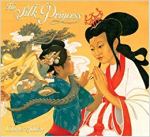
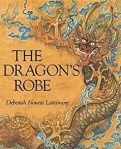
You might be able to purchase small embroidery hoops at a local dollar store. Choose a simple pattern, perhaps of a dragon, transfer it to simple white cotton, and have students embroider it in a single colour. There are many times in Chinese stories that silk, embroidery, etc. are a turning point in the story. One of these is The Silk Princess, another is The Dragon’s Robe, and of course, The Dragon Prince.
 In Japan, the oldest and wealthiest man in the village lives on the hill in his rice farm. In the village below, villagers are getting ready for a festival. Suddenly he senses a problem, and when he sees the waters recede realizes a tsunami is coming. He cannot get down to the village to warn them in time so he needs to draw the villagers to him. As a desperate act, he sets his crop on fire. The villagers rush up the hill to help put out the fire, and they are all saved.
 Night Flight has few words. It concentrates on just 14 hours and 56 minutes of time, starting in the evening from Harbour Grace in Newfoundland on May 20th, 1932, and ending in Ireland. The author recreates the experience in vivid descriptive language of what she had to do to stay awake, storms, failure of equipment, flying through the night. The author also describes what is seen from the plane as she left, during the night, flying over tundra, approaching land in Ireland. Imagine the Irish farmer coming toward this strange vehicle that had landed in his field, and the woman waving and saying, “I’ve come from America.” Amazing.
 James advises his younger brother on the 10 things you must not do if you ride the school bus. They range from not sitting at the front, not sitting at the back, not making eye contact with the bully, to not touching the bully’s stuff, not sitting with a girl, and finally to not talking to the bus driver. During the course of the day, his brother inadvertently breaks all 10. But he discovers that things work out and makes a rule 11—you don’t have to pay attention to the rules.
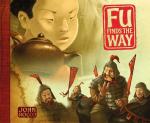 Fu is planting rice and is bored enough not to be doing it well, in neat rows. When he is rebuked, he throws a rice plant out of the paddy into the path of the warrior, Chang. The insulted warrior challenges him to a duel. Fu finds the sword Master and asks for help in getting ready. Through the night, all the Master does is teach him how to make and pour tea – with Purpose, Flow, and Patience. When Fu faces Chang in the morning he faces him with a teapot and suggests a pot of tea. Chang’s followers laugh at the boy, but Chang says, “There’s always time for tea.”
 This is the story of fishermen who are caught in a huge wave that deposits a baby into their arms. He grows up uncertain as to where he comes from or who his real parents are. A fish promises to help him answer his questions. When the boy finally becomes scared, the fish turns into a dragon and says that Naoki now knows that his “real” parents are the ones that raised him.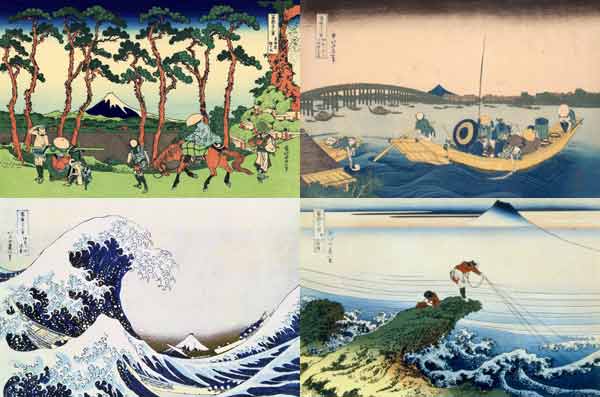
 Diana Cruchley