Night Flight

NightFlightNight Flight has few words.  It concentrates on just 14 hours and 56 minutes of time, starting in the evening from Harbour Grace in Newfoundland on May 20th, 1932, and ending in Ireland.  The author recreates the experience in vivid descriptive language of what she had to do to stay awake, storms, failure of equipment, flying through the night.  The author also describes what is seen from the plane as she left, during the night, flying over tundra, approaching land in Ireland. Imagine the Irish farmer coming toward this strange vehicle that had landed in his field, and the woman waving and saying, “I’ve come from America.”  Amazing.

Robert Burleigh, Simon and Schuster, ©2011, 978-1-4169-6733-0

Talking With Amelia Earhart

The back of the book has many quotes from Amelia Earhart that are worth discussing with students, or using as prompts for journal writing:

  • Courage is the price that life exacts for granting peace.
  • I prefer good mechanical work to rabbits’ feet.
  • I could not see.  I carried on.
  • Everyone has their own Atlantic to fly.  Whatever you want very much to do, against  the opposition of tradition, neighbourhood opinion, and so-called common sense—that is an Atlantic.
  • One of my favourite phobias is that girls, especially those whose tastes aren’t routine, often don’t get a fair break.
  • The most effective way to do it, is to do it.

 Journal Writing

Having students draw from their own experience is a good way to get a journal response to a piece of

writing.  Here are some possibilities:

  • Amelia had to stay awake a long time.  Describe a time when you were up very late.  Did you have to do anything special to stay awake?
  • Amelia was caught in a lightning storm.  Describe an experience you had with a storm?
  • Amelia had to be well prepared, but still incredibly brave.  Describe a time when you prepared very well for something and then did it.

For 8 creative writing ideas, click Night Flight to download.

The Fabulous Flying Machines of Alberto Santos-Dumont

FabulousFlyingMachines_JKTThe author’s child learns in school that the Wright Brothers invented flight.  Her Brazilian husband says, “No they didn’t.  It was Alberto Santos-Dumont”.

Santos-Dumont was a wealthy Brazilian living in Paris who created the first practical dirigible and in the book uses it to go to a store, drop anchor, and go in to shop for a hat.  He then creates the first plane to fly with some controls and under its own power, as opposed to needing assistance to get into the air. Amazingly, he was also the first man to wear a wristwatch.  Clocks wouldn’t work on an airplane, so his friend, Piaget, created a small watch you could wear on your wrist.

Victoria Griffith, Abrams Books for Young Readers, ©2011, 978-1-4197-0011-8

Contrasting Two Things

The story opens with the author recounting how her child had learned in school that the Wright Brothers had invented flight, only to have her Brazilian husband point out that it was a Brazilian who flew first, and in Paris at that.

Students could read about the Wright Brothers and contrast the two.
The Wright Brothers:

  • Flew in 1903 with few witnesses vs. Santos-Dumont flying in 1905 with a thousand witnesses
  • Needed assistance—high winds and a rail system to get up speed—to get into the air vs. Santos-Dumont taking to the air under its own power.
  • Were not wealthy vs. Santos-Dumont who was wealthy
  • Had little control of the flight vs. Santos-Dumont with controls
  • Were up for 12 seconds vs. Santos-Dumont for 20 seconds
  • Had one first in their life vs. Santos-Dumont having the first practical dirigible, first unassisted flight, first mass-produced airplane (the Dragonfly), and the first person to wear a wristwatch (invented just for him).

Then ask students why they think the Wright Brothers are famous and everyone, except Brazil, has forgotten Alberto Santos-Dumont.

Teaching the Word “Irony”

Irony means to use words, and sometimes tone, to convey the opposite of what the words seem to say. For example, it is ironic to survive the San Francisco earthquake only to die in the Jamaica earthquake. It is ironic to put a “do not deface the stop sign” on the actual stop sign. In the case of this book there are two ironic statements:

  • Santos-Dumont says that airplanes will bring about peace because we will see how similar all people really are.
  • Spectators say “nobody will forget this day” when they see Santos fly.

Discuss with students the irony of these statements.

For 7 creative writing ideas, click The Fabulous Flying Machines of Alberto Santos-Dumont to download.

The Extraordinary Mark Twain (According to Susy)

mark-twain-coverThis is the story of Mark Twain’s life in picture book form, with accompanying anecdotes from Susy who is writing this memoir so we can meet the “real” Mark Twain.  Susy, Mark Twain’s favourite daughter, did keep a memoir of observations of her dad for a short period of time, and excerpts from it are included as little fold out pages.  She talks about their home, his writing process and the role her mom plays, his leisure activities, and much more.

Barbara Kerley, Scholastic, ©2010, ISBN 978-0-545-12508-6

Spelling Mistakes

Mark Twain says his daughter’s spelling was frequently desperate.” Give students her spellings and ask them to spell them correctly—time them if you want to add some pressure. They need to add 5 seconds to their time for every word they still misspell.

Her incorrect words are: discribed incorectly, mustache, exept, extrordinary, sute, doute, Misouri, in good trimm, varius, chreatures (for creatures), expergate, donky, prosession.

This is a good time to mention that the first English dictionary was written in 9 years by one man, Samuel Johnson, and published in 1755. By contrast, the first French dictionary was written by an entire French Academy and published in 1694. It took 69 years to write. The first American dictionary was Noah Webster’s in 1806. After this spelling began to “solidify” into “correct” and “incorrect” spelling. Susy was writing in 1885.

A Book “In the Style Of”

This book has a particular style. For the most part it is a kind of story of Susy’s foray into biography. However, glued into place in the book are miniature foldout excerpts from Susy’s actual words. This is an excellent model to imitate.

In Social Studies it could take the form of a report on an explorer (for example) with inserted pages from his “diary” commenting on the events described on that page. In Science, it could be a report on a whale’s life cycle, with examples interspersed from the whale’s diary. In art, a research report on a particular artist could be written, with short imaginary diary inserts on occasion. Be sure that students realize the diary entries need only be 2-3 sentences long.

For 11 creative writing ideas, click The Extraordinary Mark Twain to download.

The House Baba Built

housebabauiltEd Young is well known for his picture books. The House Baba Built is more in the nature of a memoir of his childhood in the house his father built in Shanghai in which the family lived during World War II. We learn about the war, school, family activities in the house, taking in refugees including a Jewish family, food shortages, being unable to fill the pool…all through his eyes as a child. You can take just a part of this book for a rich study of many different topics.
Ed Young, Little Brown and Co.©2011, 978-0-316-07628-9

Exploring a Photo

Ed Young uses family photos as one of the many methods he uses to illustrate his story. Ask students to bring a picture of themselves that their family has taken – it’s best if they bring a coy. If they bring an original, make a copy for them so that the original is not accidentally destroyed.

Students need to look at their pictures and ask themselves the following types of questions:

  • How old was I when this picture was taken?
  • Where was this picture taken – describe quite precisely?
  • Why was this picture taken and kept? (Instead of others)
  • What am I wearing in this picture? How do I feel about these clothes? Was this typical of what I wore at this time?
  • What sensory memories do I have about this place – food, feel, sights, taste, smell, etc.?
  • What emotions are around this picture and why?

Encourage students elaborate and then use a copy of the picture to illustrate their “story” of the taking of the picture.

Make an Origami Box

In early spring, when the mulberry leaves sprouted, Ed Young and his friends traded silkworm eggs. They made paper origami boxes for silkworm houses and fed them on mulberry leaves.

Watch the YouTube several times and make it yourself, before you teach the class. Once they know how, it is very easy. If you live close to Richmond, there is very inexpensive origami paper at Daizo.

For 16 creative writing ideas, click The House Baba Built to download.

The Man Who Walked Between the Towers

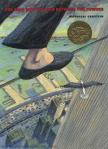
The Man Who Walked Between The TowersPhilipe Petit was always challenged to walk the tightrope in as many difficult places as possible. As the twin towers were going up in New York in 2001 he determined that he would have to walk before it was finished and occupied. He organized friends, snuck in the ropes and rigging he would need with friends, suspended the rope and then he walked out into the wind. He walked, danced, ran, knelt, and even lay down on the rope. When arrested he was sentenced to perform for students in Central Park. The book ends poignantly with the shadows of the towers after the attack on September 11, 2001.
Mordicai Gerstein, MacMillan, ©2003, 978-0-7613-1791-3

There are several related websites that can add to the study of this book.

Man on Wire (a cineme verite version of the walk):

The Man Who Walked Between the Towers (a storyteller reads the book):

The Nick Wallenda walk across Niagara:

Tightrope Walking

Stretch around 8 very long ropes across the gym floor and ask student to walk them, keeping their balance. How many seconds can they stay on the rope? Ask them to time each other with their arms at their sides, and with their arms out. Then give them a balancing pole to hold while they walk…they should see that it is a great deal easier to stay balanced. (You need lots of ropes because you want mass participation…not a lot of students watching other students.)

For the science of tightrope walking there is a nice video that explains the balance, the centre of gravity, the inner ear, and so on.

For 11 creative writing ideas, click The Man Who Walked Between the Towers to download.

Lousy Rotten Stinkin’ Grapes

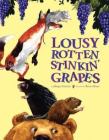
grapesA wonderful retelling of the Aesop fable where the fox makes frequent attempts to get at the grapes until he finally says that they are probably sour anyway. Hence the expression “sour grapes”.
In this version Fox attempts to reach the grapes but because he is “sly. Clever. Smart. After all, I am a fox.” He makes a plan and “voila!…Grapes!” Except it doesn’t turn out quite that way.

First of all he harnesses the energy of the bear. Then the beaver, the porcupine, the possum, each time making the plan more and more elaborate. Each time as well, the fox ignores the suggestions of his “assistants.”

When they point out their simpler plan at the end, the fox storms off in a huff. “Well, do as you wish. I, for one, wouldn’t think of eating those lousy, rotten, stinkin’ grapes now, even if I could…They’re probably sour anyway.” (While in the foreground his assistants are joyfully eating the grapes.)

Margie Palatini, Simon and Schuster, ©2009, ISBN 978-0-689-80246-1

Create Your Own Take on Aesop

Students will enjoy using this as a model to create their own version of an Aesop fable. They can add more characters, dialogue, a twist, additional descriptions, and a setting. This story is about 1,000 words, but students can write a terrific Aesop fable in about 500 words if you wish.

The Moral of the Story

Every fable has a moral. The original moral of this story is something like, “People who can’t do something, make up reasons why they didn’t want it in the first lace.” The expression “sour grapes” is used for someone behaving this way. This fable has that moral, but has several other morals worth discussing as well:

  • Don’t underestimate the help others can provide.
  • Don’t overestimate your own intelligence and underestimate that of others.
  • A simple plan can be better than an elaborate plan.

For 9 creative writing ideas, click Lousy Rotten Stinkin’ Grapes to download.

The Adventures of Mark Twain by Huckleberry Finn

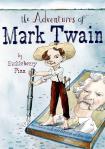
The Adventures of Mark TwainHuckleberry Finn tells, in his own voice, of the life of his author Mark Twain, a.k.a Samuel Clemens.
Robert Burleigh and Barry Blitt, Atheneum Books, ©2011, 978-0-689-83041-9

A Story with Modern Expression

Huck Finn was written in the language of a back country boy in the 1800’s USA. Ask students to write any story in which they use common 21st century expressions to show how people “really talk”. First brainstorm the possible expressions students could consider: OMG, BFF, having a rush, goofing off, being gross, or lame, or awesome, or sweet, or cool. Something could rock, or suck. Things happen 24/7. There are zits. Things rock or rule.

Then ask students to write a very brief story in that “voice” as in the opening of Huck Finn. Something less that 200 words is fine. The objective is try out the “voice” of the 21st century.

Bad Luck Superstitions

Huck Finn said that Mark Twain’s luck turned bad like after “killing a spider”. Ask students to brainstorm bad luck superstitions they have heard of. They should be able to come up with:

  • Step on a crack, break your mother’s back
  • Break a mirror – 7 years bad luck
  • Walk under a ladder
  • Cross the path of a black cat
  • A shiver means a goose walked over your grave
  • Open an umbrella inside brings bad luck
  • If you spill salt, toss it over your left shoulder or you’ll have bad luck

Students might enjoy writing a story about a character who frequently but inadvertently breaks bad luck superstitions and what happens to him or her, if anything.

For 10 creative writing ideas, click The Adventures of Mark Twain to download.

The Great Wave

The Great WaveThis is the story of fishermen who are caught in a huge wave that deposits a baby into their arms. He grows up uncertain as to where he comes from or who his real parents are. A fish promises to help him answer his questions. When the boy finally becomes scared, the fish turns into a dragon and says that Naoki now knows that his “real” parents are the ones that raised him.
Veronique Massenot, Presetel, ©2011, 978-3-7913-7058-3

Using Similes

There are 7 different similes in the story that can be listed for students to describe what two elements are being compared:

  • The wave…like a giant creature opening its foamy mouth, greedily swallowing everything before it.
  • Heart beat more wildly than all the drums of the world together.
  • All his friends shot upwards, faster than bamboo.
  • His thoughts drifted…coming and going like the water’s ebb and flow.
  • It’s scales shimmered like silver.
  • The back of the fish lengthened and began to move like a wave.
  • The sea was as smooth as glass.

Ask students to re-write a portion of a recent piece they have written to include three original similes.

Inspired by a Painting

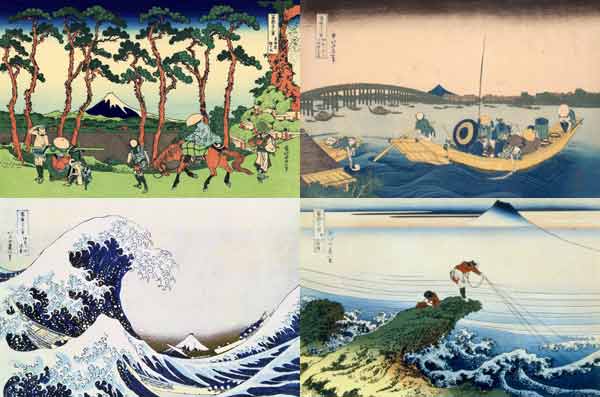
This book was inspired by the painting, The Great Wave of Kanagawa by Hokusai, which was part of a series of woodblock prints called 36 Views of Mount Fuji. In this painting, Mount Fuji is hidden by the wave. Why not choose some other prints from the same series, and ask students in groups to write a story using that picture as an inspiration?

Great-Wave-Composite

For 9 more creative writing ideas, click The Great Wave to download.

Queen of Falls

QueenFallsAnnie Taylor was the first person to go over Niagara Falls in a barrel, the first to survive, the first woman for over 95 years, and the only woman to do it alone. This is her story – the story of a woman over 60 years of age who did an amazing thing.

Chris Van Allsburg, Houghton Mifflin, ©2010, 978-0547-31581-2

Start in the Middle of the Action

This book is a brilliant example of starting a story in the middle of the action, then going back to fill in the backstory, and bringing your reader back up to the beginning point of the story.

In this book, a crowd has gathered to watch a barrel go over the falls but why is the barrel so important? The book then flashes back to Annie Taylor’s life, leads her up to the falls, and then follows on with the rest of the story. After analyzing how the “start in the middle of the action” strategy works, have students re-write a story they have written by starting at the action point and flashing back to the beginning.

Science Egg Drop Project

Annie Taylor knows, “You can put an egg inside a can and let it drop to the floor. The can may not be damaged, but it’s a different story for the egg.” This is a classic science project. How do you protect an egg from breaking in a 20 foot drop? One of the neatest demonstrations is The Science Egg Drop Project by Bradley who demonstrates 5l contraptions he built to protect an egg in a 19 foot drop. This can also make a good science challenge for your students.

For 9 writing ideas, click Queen of the Falls to download.

Shhh! Canadian Scientists and Inventors Rule ‑ A Science ABC

coverThis one is my own book, which I’m quite thrilled with. It follows four characters—the beaver, Jon, Jesse, and Max—as they adventure with a Canadian science invention or discovery for each letter of the alphabet. From A is for Acetylene to Z is for Zipper (or B is for Blackberry to Y is for Yukon Gold Potato), Canadians are totally inventive. This title has been authorized for use in both BC and Alberta and is intended for Grades 4–9.

I consider this to have “the best website ever” to accompany a picture book. Check is out here and tell me what you think. It includes:

  • over 60 more Canadian inventions and discoveries
  • dozens of teaching ideas in language arts, math, science, social studies, and games
  • links to other sites connected to Canadian science
  • a complete scavenger hunt of Canadian science ready to print and go…and lots more

You can even order it at my store.