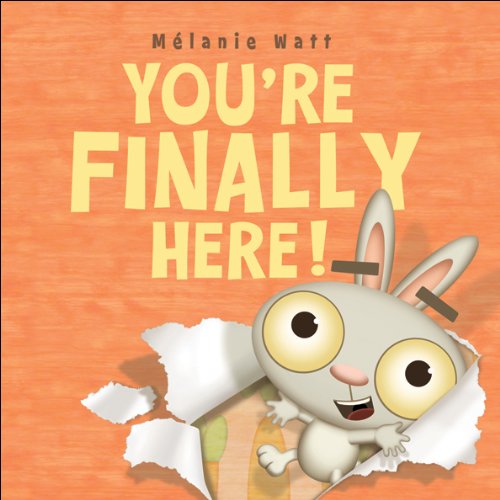
 Our Bunny speaks to us about our tardiness in having taken so long to come to visit him in the book. He even wants us to sign a contract about staying there. But, he gets so involved in a phone call that he ignores us, and, in the end, we leave.
Melanie Watt, Kids Can Press, ©2011, 9978-1-55453-590-3
Using the Character
The character is drawn in many simple poses in the book. Scan or trace them onto a single sheet of paper and then make copies for students creating their own version of the rabbit story.
The pattern of this book is easy to imitate. In the center of the book the rabbit is complaining:
- . . .”how long I’ve been waiting in here?” Long enough to . . . (4 times)
- . . .”how unfair it is to keep me waiting?” As unfair as . . . (4 things)
- . . .”how rude is it to make me wait?” As rude as . . . (4 things)
This could be a springboard for any character complaining about something. Imagine it is a rabbit who is unhappy with his school lunch.
How many weeks have I had the same lunch?
- since Christmas
- since my birthday
- since I accidentally said I liked bacon, lettuce, and tomato sandwiches, etc.
How much don’t I like lettuce?
- as little as I like liver
- as little as fried jelly beans, etc.
How long does it take me to eat it?
- until all the other kids are already finished the first inning of baseball
- until my teeth wear out from chewing, etc.
Personal Writing (Extreme Writing)
Some possible personal writing topics are:
- times I have to wait and what I am thinking
- times that are really boring
- times that I was treated unfairly
For 9 creative writing ideas, click You’re Finally Here to download.
 The ant is invited to the lion’s dinner party and is shocked at the manners of the other guests as they greedily “share” the cake. When she herself is accused of being greedy, the ant turns the tables on the other guests.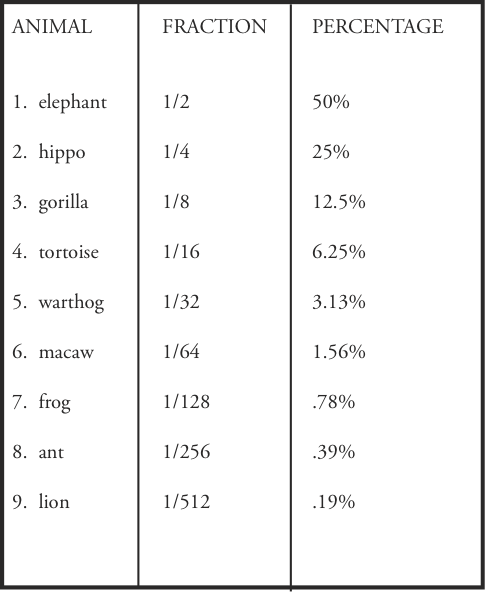
 Cinder Edna is the liberated neighbour of Cinderella. Cinderella needs a fairy godmother to get her to the ball; Cinder Edna earns money mowing lawns and cleaning parrot cages. She earns enough for the dress, wears comfortable loafers to the ball, and takes the bus. She gets the best prince too—the brother of the one Cinderella marries.
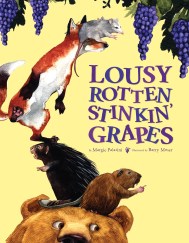 In this twist on Aesop, the fox progressively involves a series of animals in an elaborate plan to help him get the grapes. He refuses to listen to their advice, and when his plan fails, he leaves saying the grapes are probably not ripe. After he leaves, the other animals get the grapes.
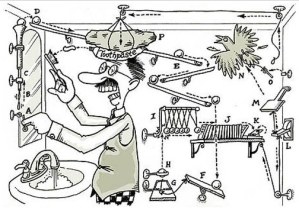 Our fox makes somewhat of a “Rube Goldberg” plan, each part of which is more elaborate than next, and requiring ever more complicated diagrams. The original model of a plan that is too elaborate is named after Rube Goldberg. The illustration is of a machine to brush your teeth. Ask students to create a “Rube Goldberg” plan to do something simple like wash a car, or sharpen a pencil.
 A classic Chinese folktale, of a man who owned a horse and at each turn of fate believed that things were neither as good, nor as bad, as they might seem.
 The Hare family is having dinner when Goldilocks, fleeing from the three bears, falls down the hole. Having hurt her foot, she remains as a guest, but is a terrible one. How can the Hare family get rid of her?
 The king has given up his kingdom and his daughter decides to try to marry Prince Drupert so she enters the competition for his hand. During the food portion of the competition she accidentally invents pizza and discovers that she would rather sell pizza than marry the prince.
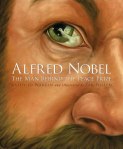 Alfred Nobel invented dynamite and became very wealthy. Saddened by its us in war he left his entire fortune to a yearly prize for those “who have rendered the greatest services to mankind.”
 How Gutenberg Changed the World. Illustrated like a medieval manuscript, the book shows how all the parts of the process came together to create the first printing press.
 Diana Cruchley