
This is a pourquoi tale about how the frisbee was invented. Grizz Brickbottom and his 3 friends are the toughest cowboys on the prairie. They decide they need someone with silky hair, a lovely smell, and sweet kisses—and accidentally adopt Foofy, the miniature poodle. She is a picky eater and likes French cooking so Chuck Wagon is charged with that as well as singing her to sleep. Bald Mountain has to comb her hair. Lariat has to make her a leash, and tie a ribbon in her hair. They have a great time with Foofy who loves to fetch thrown tin plates. Without meaning to, the cowboy team gets used to being clean and moves into the town to open a restaurant, a hairdressing salon, a gift shop, and a business making the Grizz-B.
John Frank, Simon and Schuster, ©2004, ISBN 0-689-83461-6
Write A Fractured Cowboy Fairy Tale
The Toughest Cowboy is full of “cowboy language”. You could give each student a copy of a single page, and have them work in groups with their assigned pages to identify some of the “slang” and the words about the cowboy life on the page. Here is only a small sample of what they will encounter: reckin’, move’n, ain’t, hitched up, eatin’, druther, saloon, addled, a lick and a promise, saddle up, chaps, save your bacon, bad egg, ballyhoo, barrel rider, bed down, bee in your bonnet, big guns, bilk, blarney, bridle, reins, lariat, spurs, stirrups, branding iron, etc. The idea is that they can create a list that they can use to create their own western tale.
To make it easier you could suggest creating a fractured fairy tale. A western fractured fairy tale based on Cinderella is Bubba the Cowboy Prince. The Cinderella is a cowboy who is oppressed by his two brothers. The “prince” is a woman who owns the neighbouring ranch. There is a fairy god-cow. Lots of fun. Read it to your students and discuss the points of comparison.
If you have the book, read the story a second time asking them to pay attention to the “cowboy” language being used. Stop for every page or so to ask them what they heard then give them a list of fairy tales for which they might do a cowboy version: Three Little Pigs, Little Red Riding Hood, Jack and the Beanstalk, Hansel and Gretel, Goldilocks and the Three Bears, etc. They need to set it in the old west, and use cowboy lingo. Emend them there are lots of fractured fairy tales out there that are “making money” for their authors..
Good Manners
“You got no upbringin’, that’s what’ wrong,” said Grizz. “You ain’t had a bath in six months, you never heard of a napkin, and you use your fingers to clean your teeth, and pick your noses.”
Generate with students categories of good manners: table manners, telephone/message manners, social manners when you in a group, store manners, personal hygiene manners, etc.
Ask students to draw a line to create a grid or set of columns for each category then give them as individuals 5 minutes to write down as many things about good manners in Canada that they know in each of these categories. Put them into groups of 4 to generate the longest list they can with each group having its own aspect of the grid to work on.
If you don’t have a lot of time, simply select one of the categories. For example, table manners are where it is most likely that there will be differences based on ethnicity. In many ways what is good manners is culture specific or is based on increasing awareness of hygiene to keep others from getting sick.
An international example of what constitutes good manner is the SkyTrain. In Canada, it is perfectly OK to talk to your friends, and even sometimes to the stranger sharing a seat. In Japan on the other hand, the commuter train is a silent place, even for good friends riding together. Japan is very densely populated so general rules on silence help your environment from being full of “noise pollution.”
Good discussion can arise for what the logic behind the “good manners” might be. For example, it is said that shaking hands right-handed, arose from showing your good intentions to demonstrate the you were not carrying a weapon.
“Character” Exploration
Grizz Brickbottom is tough. Ask the student to listen for how tough he is. Then read the opening of the book to the students. After, ask them what Grizz eats (fried boots and lizard gizzards), what he drinks (a quart of Tabasco sauce a day), how he sleeps (with a rattle snake), how he flosses (with barbed wire), what he can do with his stubble (grind a branding iron into a belt buckle).
Give students a collection of possible characters defined by a single quality—kind, mean, messy, neat, fast, slow, etc.—and ask them to create a humorous opening description of that character…as though they were going to write a story.
Later if you are interested in expanding beyond the creation of a character by stereotype, you can ask what other qualities we learn he has as the story progresses, and how we know: he’s kind, he is a good friend, he’s a leader, he likes animals, he can learn and change, he is playful, etc.
For more creative writing ideas, click The Toughest Cowboy to download.


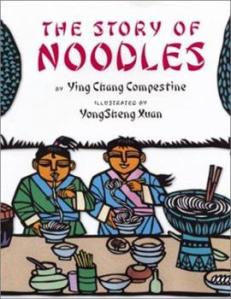


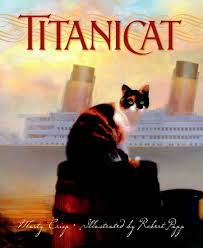
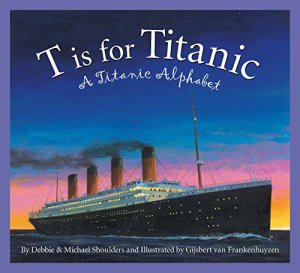

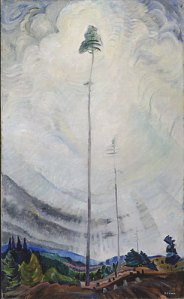


 One of Margaret Wise Brown’s out popular books was The Important Book. The video below is a reading of The Important Book by Gary Eisenberg. Students will instantly understand that the pattern of the book itself, The Important Thing About Margaret Wise Brown, is totally an homage to her original book. You would have to know her books in order to recognize the homage.
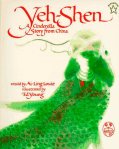 Yeh-Shen was the orphan daughter in her stepmother’s home, but the stepmother favoured her own daughter. Yeh-Shen’s friend, the fish, would come out of the water, rest on the shore, and she should feed it from her scarce resources. Her stepmother put on Yeh-Shen’s coat, lured out the fish, and killed it. As Yeh-Shen grieved, an old man appeared and told her to retrieve the bones, for they had power to grant wishes. Yen-Shen then wished on the bones for food. When the spring festival arrived (where young men and women could find partners), Yeh-Shen was not allowed to go. The bones of the fish made her an azure gown, a kingfisher feather cloak, and shoes of solid gold. When it looked like her stepmother would recognize her, she fled, leaving behind one gold slipper. In searching for his “bride”, the king noticed Yeh-Shen’s tiny feet, and when she tried on the slipper, her spring festival clothes reappeared on her. Ta da!
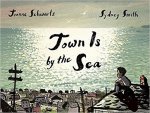 Written in the first person, a boy tells of his simple day. First he describes the setting by the sea with a house, a road, a grassy cliff, the sea, and the town and his father digging coal under the sea. Then getting up, going to the playground, having lunch, doing an errand in town, visiting his grandfather’s graveyard and and going home, listening to the radio, having dinner, An ordinary day, and at every stage he thinks of his father digging coal under the sea.
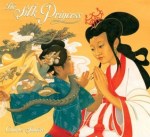 Hsi-Ling Chi is the daughter of the Emperor and is rarely noticed. The Emperor has been seeking for a cloth worthy of his nobility. One day, Hsi-Ling Chi notices a cocoon has fallen in her mother’s tea and is unraveling. They play a game to see how long it is and the little girl ties it around her waist. She goes out past the stone garden, past the spider, outside the palace, to the holy mountains where a dragon threatens her. Along the way she loses the thread, but meets a hermit who shows her how the silk can be woven, and offers to take her home. She falls asleep, wakens to no silk cloth but still with the silk thread tied around her waist—the whole thing was a dream. When she gets back her mother hears her story and thinks, “Hmm? Is this possible?” She summons the royal weavers and the rest is history.
 Diana Cruchley