 Bruce, the bear, is gathering eggs for his dinner recipe, but unfortunately they hatch. The ducklings immediately imprint on Bruce and follow him everywhere. After trying to get them to leave he gives up and raises them, even trying to teach them to migrate. When that fails, they end by vacationing in Miami every year.
Ryan T. Higgens, ©2015, Disney Hyperion, 978-1-4847-3088-1
Teaching About Imprinting
The first research on imprinting was by Konrad Lorenz around 1935. He observed that certain birds will develop a rapid strong attachment to a certain individual, often a mother. Geese will imprint on the first suitable moving stimulus in the first 13-16 hours (called the critical period). After that it is hard to change. It can even be a box moving on a track.
It is particularly associated with “nidifugous” birds, that is, ones that leave the nest shortly after hatching. They are born with open eyes, are capable of independent motion, and leave the nest almost immediately. It is from Latin for “nidus” meaning “nest” and “fugeri” meaning “to flee” (hence the word fugitive).
The purposes of imprinting are to learn what species you are, how your species behaves, what the sounds of your species are, what would be the appearance of an appropriate mate, for protection by staying near mother, and to learn to find food.
Typical birds that imprint are chickens, ducks, geese, crows, kestrels, vultures, eagles, raptors, and wading birds.
Ask students to first brainstorm what questions they would have about what animals imprint:
- What kinds of birds imprint? List some. What other animals imprint?
- Why do they imprint—what is it for?
- What are some of the birds that don’t imprint?
- What are some of the birds that do imprint?
- What are the characteristics at birth of birds that imprint?
- How are the birds that don’t imprint different?
- Who discovered imprinting?
- What is the problem if birds imprint on humans?
It’s Bad Science
In the end of the story, a little baby turtle approaches a duck and says, “Mama?” It’s cute—but not good science. Ask students why? As mother turtle lays hundreds and hundreds of eggs that the male fertilizers, the eggs are buried, and both parents leave. The babies hatch and must flee to the sea under the assault of predators who have gathered for “lunch”. Barely 1 in 100 survive to return to the beach. They have no parent to which to imprint.
Extreme Writing and Grumpy Cat
Mother Bruce is grumpy, but not as grumpy as Grumpy Cat. For Extreme Writing, go to my Grumpy Cat Pinterest page that contains 26 Grumpy Cat statements with three choices for Extreme Writing topics.
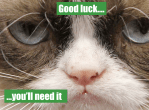
For the Good luck… You’ll Need It image, for example, the three prompts are:
- Lucky things that have happened to me—or a friend.
- Good luck and bad luck—superstitions I know.
- “It started as a normal Monday morning,” and continue with alternating good and bad luck.
For 10 creative writing ideas, click Mother Bruce to download.
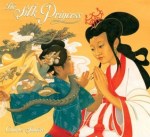 Hsi-Ling Chi is the daughter of the Emperor and is rarely noticed. The Emperor has been seeking for a cloth worthy of his nobility. One day, Hsi-Ling Chi notices a cocoon has fallen in her mother’s tea and is unraveling. They play a game to see how long it is and the little girl ties it around her waist. She goes out past the stone garden, past the spider, outside the palace, to the holy mountains where a dragon threatens her. Along the way she loses the thread, but meets a hermit who shows her how the silk can be woven, and offers to take her home. She falls asleep, wakens to no silk cloth but still with the silk thread tied around her waist—the whole thing was a dream. When she gets back her mother hears her story and thinks, “Hmm? Is this possible?” She summons the royal weavers and the rest is history.
 The story of how 200 years ago, the daughter of Lord and Lady Byron, Ada Lovelace, wrote the first program—before there was electricity to make it work. Working with Thomas Babbage on the Analytical Engine, she wrote step-by-step how Bernoulli numbers could be coded for the machine.
 The fisherman in this story is fooled by his three nephews. They persuade him that they will make stone soup, then distract him at each point, in order to add real ingredients to the soup. He is
 A pair of students have an assignment to create and tell a fairy tale to the class and are in serious dispute as to the direction the plot will take. The girl wants it traditional; the boy wants it cool.
 A classic Chinese folktale, of a man who owned a horse and at each turn of fate believed that things were neither as good, nor as bad, as they might seem.
 Alfred Nobel invented dynamite and became very wealthy. Saddened by its us in war he left his entire fortune to a yearly prize for those “who have rendered the greatest services to mankind.”
 Little Wolf never likes what is made for dinner: Lamburgers, Sloppy Does, Chocolate Moose—nothing pleases him. All he can think about is “boy”—boy chops, baked boy-tatoes and boys -n-berry pie. On the way home to three pig salad, Little Wolf has the idea of pretending to see a boy. After this trick results in him getting junk food for several nights, his father overhears him bragging to a friend. They refuse to listen to him…even though he has seen an entire troop of boy scouts in the woods, and one even enters the cave. Lesson learned, and the boys, at least, live happily ever after.
 Diana Cruchley