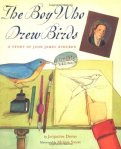
 James Audubon was French, and was sent to America to learn business, and also to avoid French military service in Napoleon’s army. While there, he became passionate about the observation and detailed paintings of birds. This is his story with particular emphasis on his “test” of migration.
Jacqueline Davies, Houghton Mifflin, ©2004, ISBN 0-618-24343-7
Audubon Art
First, students need to watch a YouTube on drawing birds. The one I liked best, is a little “cartoon-like” but it is fast, and clear and could be adapted to more “realistic drawings.
Next, provide a set of Audubon style drawings for students to “observe”. Ask them to draw just one of the birds. They should sketch in pencil, and then go over it when adding details, using ink. Finally they would erase the original pencil, and finish with coloured crayons or felts.
Tell them not to worry because when the original inspiration is taken away, their drawing will look really good. (A lot of students think that “real drawing” needs to be done from your head. No. All great artists had models, observed from nature; or now they start with a photo.)
If students draw on a piece of paper around 3 X 5 inches, it can be turned into a very nice card for Mother or Father’s Day.
Famous Naturalists Vimeo
Click The Great Naturalists to watch a video for the University of Idaho about some of the most famous naturalists.
Famous Naturalists – Rapid Research
 Naturalists study nature the way it is rather than the way theories say it is. As a result, going back to Aristotle, there has been steady progress in science because of the work of naturalists. The attached pages describe 17 naturalists and their contributions to the study of the real world. This can be a great Rapid Research project to build general knowledge about history (useful as well in building vocabulary), speaking and writing skills, and, of course, research skills.
Working in pairs, students must find 20 facts about their naturalists and present a list of 20 complete sentences describing what they have found. There are then several options:
- Students each write their own essay describing what they have found out, which is marked, then mounted on cardstock and illustrated from the Internet for a very effective classroom display of student work.
- Finished essays can be submitted with a literal question and an answer from the book. Once the finished essay is mounted, the question is added and the answer form part of a key on your desk. The cardstock items are numbered in 72 point numbers, and then students circulate to find 5 answers from the pages. They may go in pairs, but only one pair may be at a station at a time in this Scavenger Hunt.
- The illustrations for the naturalists can be quickly placed by you into a Keynote or PowerPoint presentation and students, again in pairs, have each 1 minute (2 minutes in total) to present their information. This is the one most likely to increase general knowledge in students.
For 7 creative writing ideas, click The Boy Who Drew Birds to download.
 The Queen is coming to Littleton and Miss Hunnicutt wants to wear her hat with a chicken on top. After she stands up for her right to wear what she wants, we discover that the Queen loves her hat with the turkey on top.
 Ask students to choose one to research (in pairs). The team needs to produce 12 facts about the artist, and 6 facts about the painting (where it is located, size, and, the model, the hat, etc.)
 This is a picture book version of Jerry Seinfeld’s wonderful routine on what Halloween was like to him as a child.
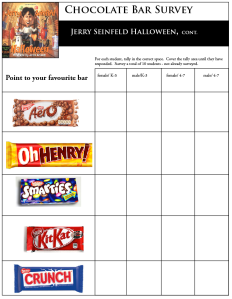 The Candy Vote
 This little 48 page book, part of the Treasure Hunters series describes several major art thefts since the beginning of the 20th C. The Mona Lisa, many paintings in the Isabella Gardner Museum, Munch’s The Scream, and a painting by Cezanne are all included.
 Latitude and Longitude are just imaginary lines on the surface of the earth, but are critical to navigation. Latitude (north and south) was known, but it wasn’t until John Harrison (a clockmaker) tackled it in the 1700’s in order to win a prize, that the problem was solved.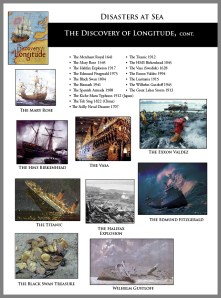
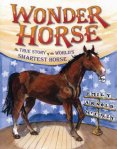 Subtitled The True Story of the World’s Smartest Horse, this is the story of how Bill Key, former slave, found and trained his horse Jim Key. Unlike other trainers of the time, he used only kindness to teach Jim to recognize the alphabet and colours. They travelled America doing shows, where Bill took the opportunity to teach animal owners the importance of humane treatment. Bill and his horse had a huge influence on the movement leading to the RSPCA.
 In Japan, the oldest and wealthiest man in the village lives on the hill in his rice farm. In the village below, villagers are getting ready for a festival. Suddenly he senses a problem, and when he sees the waters recede realizes a tsunami is coming. He cannot get down to the village to warn them in time so he needs to draw the villagers to him. As a desperate act, he sets his crop on fire. The villagers rush up the hill to help put out the fire, and they are all saved.
 Lipman Pike is credited with being the first professional baseball player (then called “base”). This is the story of his childhood, the development of his skills, the aspirations his father had for him, and how he came to be the first “professional” baseball player.
 Night Flight has few words. It concentrates on just 14 hours and 56 minutes of time, starting in the evening from Harbour Grace in Newfoundland on May 20th, 1932, and ending in Ireland. The author recreates the experience in vivid descriptive language of what she had to do to stay awake, storms, failure of equipment, flying through the night. The author also describes what is seen from the plane as she left, during the night, flying over tundra, approaching land in Ireland. Imagine the Irish farmer coming toward this strange vehicle that had landed in his field, and the woman waving and saying, “I’ve come from America.” Amazing.
 The author’s child learns in school that the Wright Brothers invented flight. Her Brazilian husband says, “No they didn’t. It was Alberto Santos-Dumont”.
 Diana Cruchley