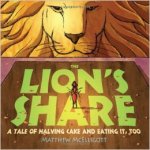
The Lion’s Share

The Lion's ShareThe ant is invited to the lion’s dinner party and is shocked at the manners of the other guests as they greedily “share” the cake. When she herself is accused of being greedy, the ant turns the tables on the other guests.

McCelligott’s Math

On his website, McCelligott has an interesting step-by-step explanation of geometric progression, which is what this book represents. It culminates in explaining why we get I-POD in 2,4,8,16, or 32 GB and not other numbers. For your older students.

Math – Geometric Progression

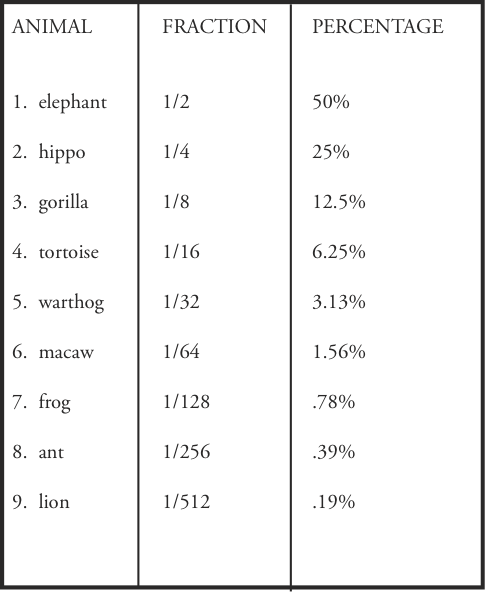
Geometric ProgressionGive students a list of the animals and ask them to create a chart of the values in each division of the cake. Walk them through the first three, then explore the math pattern for solving the rest of progression and the equivalencies.

For 9 creative writing ideas, click The Lion’s Share to download.

Cinder Edna

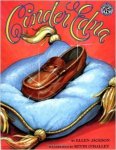
Cinder EdnaCinder Edna is the liberated neighbour of Cinderella. Cinderella needs a fairy godmother to get her to the ball; Cinder Edna earns money mowing lawns and cleaning parrot cages. She earns enough for the dress, wears comfortable loafers to the ball, and takes the bus. She gets the best prince too—the brother of the one Cinderella marries.

Ellen Jackson, Mulberry Books, 1998, ISBN 0688162959

Here It Is, and Again, and Again.

A turning point in the story is going to be that Cinder Edna knows 16 ways to make tuna casserole. The fact is planted in the story when we first meet her and it is listed as one of her skills. It is mentioned again when she meets Rupert and discovers he likes tuna casserole too. Finally, Rupert uses the 16 types of tuna casserole to determine which is the real Cinder Edna.

This is a really great skill to teach students when writing a story. When you have decided on the solution to your problem, you can plant it into the story three times—the first two quite unobtrusively. It makes the whole story seem to come together perfectly.

What Happened Next Stories

In addition to being really entertaining, the “What Happened Next” story is a natural development of the predicting skill of reading. It is also easy to write because students do not have to create a character, a setting, a problem, etc. They can limit themselves to a problem or two for their character.

There are many existing “What Happened Next” stories, but you will not want to have the students read them before they write their own. However, studying them afterward can show students that many adults do what they have just done and make a good living doing it.

First, brainstorm a list of fairy tales where “What Happened Next?” Here are some possibilities: Goldilocks and the Three Bears, The Three Little Pigs , Three Billy Goats Gruff, Little Red Riding Hood, Snow White and the Seven Dwarfs, Rapunzel, Sleeping Beauty, and The Frog Prince.

For 5 creative writing ideas, click Cinder Edna to download.

The Spider and the Fly

TheSpiderandtheFlyBased on the original poem of the story of the fly who is flattered into stepping into the spider’s web, this picture book is beautifully illustrated in black and white. The spooky Victorian house is the perfect setting for the tale.

Mary Howitt, Simon and Schuster, ©2002, ISBN978-0-689-85289-3

A Non-Aesop Fable

This is a fable not written by Aesop. What are the characteristics of a fable that demonstrate that this is one:

  • animal characters—behaving in their stereotypes
  • a moral to the story
  • succinct
  • animals are anthropomorphized
  • frequently doesn’t have a “happy ending”

The Moral of the Story

Fables always have a moral. The rhyming moral of this story is:

And now, dear little children, who may this story read, To idle, silly, flattering words I pray you neer give heed; Unto an evil counselor, close heart and ear and eye, And take a lesson from this tale, of the Spider and the Fly.”

Be sure students know what that means. Do they agree that it is the moral of the story? What modern “schemer’s webs” might there be to tangle you up?

  • internet fraud
  • internet predator
  • free “start up” drugs

For 7 creative writing ideas, click The Spider and the Fly to download.

Lousy Rotten Stinkin’ Grapes

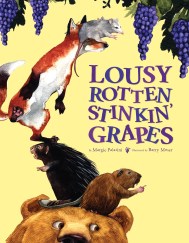
LousyRottenStinkinGrapesIn this twist on Aesop, the fox progressively involves a series of animals in an elaborate plan to help him get the grapes. He refuses to listen to their advice, and when his plan fails, he leaves saying the grapes are probably not ripe. After he leaves, the other animals get the grapes.

Margie Palatini, Simon and Schuster, ©2009, ISBN 978-0-689-80246-1

The Power of Repetition

This book presents an opportunity for students to understand the power of a repeated line; in this case, “After all, I’m the fox. Sly. Clever. Smart.” Also repeated are: “Voila! Grapes!” and “If you say so.”

As a listening skill, ask each 1/3 of the class to listen for their particular phrase and note the total number of times it occurs, as well as when each of them happens.

Ask them to write a story, or re-write an existing one, to add humorous repeated phrases.

A Rube Goldberg Plan

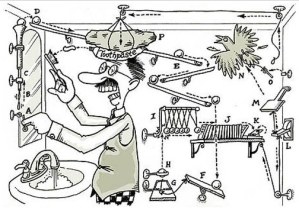
gizmodo-the-top-10-rube-goldberg-machines-featured-on-film-rube-goldbergOur fox makes somewhat of a “Rube Goldberg” plan, each part of which is more elaborate than next, and requiring ever more complicated diagrams. The original model of a plan that is too elaborate is named after Rube Goldberg. The illustration is of a machine to brush your teeth. Ask students to create a “Rube Goldberg” plan to do something simple like wash a car, or sharpen a pencil.

Rube Goldberg was a cartoonist who was most famous for creating cartoons to solve simple problems in an elaborate way. The board game, Mouse Trap, is based on a Rube Goldberg machine. Today, there are Rube Goldberg contests for inventors to create overly elaborate solutions to problems. You can view some of these machines on YouTube, my particular favourite is OK Go’s music video for “This Too Shall Pass” because there is music cleverly included.

For 9 creative writing ideas, click Lousy Rotten Stinkin’ Grapes to download.

The Lost Horse

The Lost HorseA classic Chinese folktale, of a man who owned a horse and at each turn of fate believed that things were neither as good, nor as bad, as they might seem.

Ed Young, Voyager Books, Harcourt, ©2004, ISBN 0-15-201061-5

Oral Language: The Unfortunately Game
Ask students to stand in a large circle. Start with a line such as “James went to the library.” Continue from there with the next student saying, “Fortunately…”. Students alternate a fortunate, unfortunate circumstance as they go around the circle. This requires students to be a little inventive, and warms them up to the idea of writing their own book. Once students understand the system, playing in smaller groups creates more participation for each individual.

Write Your Own “Perhaps It Might Not Be A Good Thing” Story…

Create a scenario and then write a story in which a character repeats your catch phrase—each time saying “It might not be so great” or “It might not be so bad”.  This can involve something simple like forgetting your homework, lunch, library book, etc.  It could even be set somewhere such as the middle east, with the issue involving a camel.

The Lost Horse is written in only 207 words in total, and 17 sentences, so it is not a huge challenge.

Create Your Own Wisdom

What do you think the “moral” of the story is?  Discuss with the students.

Talk about using the idea of “what I learned from this was…” when they write their own personal writing anecdotes.  We take away a lesson from a lot of the things we do in life…that’s how we avoid making the same mistakes  over and over again.

For 8 creative writing ideas, click The Lost Horse to download.

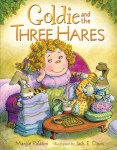
Goldie and the Three Hares

GoldieandtheThreeHaresThe Hare family is having dinner when Goldilocks, fleeing from the three bears, falls down the hole. Having hurt her foot, she remains as a guest, but is a terrible one. How can the Hare family get rid of her?

Margie Palatini, Harper Collins, ©2011, 978-0-06-125314-0

Houseguest Manners

Goldilocks is a living example of absolutely terrible houseguest manners. They are so bad, that students should be able to construct a “good house guest manners list” that consists of mainly doing the opposite of what she does. Challenge them in small groups to come up with a list of 10 Great House Guest rules. (They shouldn’t forget bringing a gift for the host/hostess and sending a thank you note.)

The Trailer

The trailer for this book is really a trailer, that is, it summarizes her departure from the three bears and then proceeds to describe how she is the “houseguest who won’t leave.” It’s clever and fun.

Personal Writing (Extreme Writing)

Some topics for personal writing might be:

  • Stories about sleepovers and other times I was a houseguest. (At Grandmother’s? Or a sleepover?)
  • Stories about injuries I have suffered in my life.
  • House rules: If you were going to write them down, what are the house rules for your house?
    • No shoes on the furniture.
    • Brush your teeth before sleep.
    • Make your bed?
    • Say grace?
    • Do the dishes? etc.

For 9 creative writing ideas, click Goldie and the Three Hares to download.

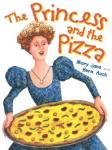
The Princess and the Pizza

ThePrincessandthePizzaThe king has given up his kingdom and his daughter decides to try to marry Prince Drupert so she enters the competition for his hand. During the food portion of the competition she accidentally invents pizza and discovers that she would rather sell pizza than marry the prince.

Mary Jane and Herm Auch, Holiday House, © 2002, ISBN 0-8234-1683-6

Stories about Inventing

This story is about the invention of pizza and how it got its name. Students could be asked to write inventive stories of how ice-cream, sandwiches, Coca-Cola, and other common foods were invented got their names. These “how things came to be” stories have their roots in ancient Greek tales by Aesop, and extend to the 20th century tales of Paul Bunyan.

Genre Writing

There are several writing topics that rise naturally from this picture book. The topics could be done as Five Square Genre as well.

  • Write the essay: Why I Want to Have the Gracious and Exquisitely Beautiful Queen Zelda for my mother-in-law.
  • Write a letter from Queen Zelda to the princess asking Paulina to forgive all and getting permission to marry her dad.
  • Write a story of what happened to one of the other princesses on her way home.
  • Write a personal memory about a time when you were treated unfairly. (It doesn’t have to turn out well.)
  • Write a diary entry from Paulina about her new boyfriend who is the opposite in every way from Prince Drupert.

For 6 creative writing ideas, click The Princess and the Pizza to download.

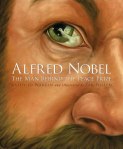
Alfred Nobel: The Man Behind the Peace Prize

Alfred NobelAlfred Nobel invented dynamite and became very wealthy.  Saddened by its us in war he left his entire fortune to a yearly prize for those “who have rendered the greatest services to mankind.”

Kathy-Jo Wargin, Sleeping Bear Press, ©2009, ISBN 978-1-58536-281-3

Famous Winners of the Nobel Prize

Divide the class into 4 giving you approximately 8 groups. Further divide them until there are 8 groups of 4. Give each group 4 names from the Prize Winners Page to search at NobelPrize.org. As they click each name, they will find a picture of the winner and the biography will give them a description of what the person did that made them a worthy winner of the prize.

prize winners pageEach chooses one of their 4 names and writes from 50-100 words describing their winner. These can be turned into oral presentations if you wish. Have students with the same winner work together.

Nobel Prize Games

NobelPrize.org has more than 10 great games you can play to learn more about the Nobel Prize winners, about science and medicine, as well as a nice “doves game” which would fit in well with the theme of this book. Games include:  Laser Challenge, blood typing, Pavlov’s dog, double helix, electrocardiogram, peace doves, split brain, and the immune system.  They are really fun to play, and demanding. Click here to visit the Nobel Prize Games.

Origami:  The Crane

Because the crane is a symbol of peace in Japan, this can also be a time to introduce the book Sadako and the Thousand Cranes by Eleanor Coerr.  This is the story of the little survivor of Hiroshima who succumbs to leukemia—“the atom bomb disease”—and makes a thousand origami cranes in order to wish for peace.

There are several YouTube sites with more information on Sadako—as well as this being a good time to teach students how to make the origami crane.

For 8 creative writing ideas, click Alfred Nobel: The Man Behind the Peace Prize to download.

From the Good Mountain

FromtheGoodMountainHow Gutenberg Changed the World. Illustrated like a medieval manuscript, the book shows how all the parts of the process came together to create the first printing press.

James Rumford, Roaring Book Press, ©2012, ISBN 978-59643-542-1

Writing From the Parts

The structure of this book is to describe something without saying what it is, and then to ask a question.

  • What was it?

Then it describes how to make the thing, and asks another question:

  • What was this thing made of rags and bones?

Then it answers it, and says it was ready.

  • It was paper, and it was ready.

Slowly, the story builds as the next thing needed is leather, then gold, then ink, then printing types, then the printing presses, then the person (Johannes Gutenberg) until finally the book is made.

It’s a gorgeous, rhythmical pattern that students could imitate with something easier, such as making fudge. To make fudge you need:

  • sugar
  • butter
  • brown sugar
  • icing sugar
  • a stove
  • a glass tray
  • a knife
  • a refrigerator

The recipe online for Cora’s fudge is the easiest one I know, because it doesn’t require any temperature gauge. Students don’t make the fudge—you do so that you can give out a sample.

“In the year 2012, in the city of New Westminster, there appeared a mysterious thing. It was made of sugar cane, cows milk, brown sugar, icing sugar, a stove, a fridge, a glass tray, and a knife. What was it?”…and so on.

It would be fun…and they could see that any time they needed to explain something where many other things had to come together first in order for the item to be successful…this pattern would be very impressive.

The recipe for Cora’s fudge is at here. (One tip: when it is partially chilled, make cut lines in the fudge, so that it comes out more easily in the end. If you forget, this will still work.)

Paper chase Vocabulary Game

Here’s a chance to develop the vocabulary of paper. Find samples of all of these kinds of paper and create 8 different packages with labels. Allow students to feel and look at, and study the names of the papers. Then remove these study material.

Next given them an envelope with sample papers and separate labels and ask them to match the word to the sample. Add a timing factor to make it more fun.

  1. bond paper
  2. cellophane
  3. parchment paper
  4. cardboard
  5. blotting paper
  6. carbon paper
  7. cardstock
  8. butcher paper
  9. newsprint
  10. crêpe paper
  11. glassine paper
  12. origami paper
  13. wax paper
  14. tissue paper
  15. wrapping paper
  16. manila tag
  17. toilet paper


For 10 creative writing ideas, click From the Good Mountain to download.
The Quiltmaker’s Gift

QuiltmakersGiftThis book is not new, but has been recently re-issued, so I am including it because it is great for writing ideas. The Quiltmaker makes quilts only for the poor. When the king covets one she refuses, but will make one square for each gift he gives away. After several threats, he gives in, and finds that giving to others is where he find happiness.

Jeff Brumbeau, Scholastic, ©2001, ISBN 0-439-30910-7

The Pattern Story

The quilting patterns shown on the 32 pages of the book have been chosen to echo the part of story told on each page. Give each student a page and a copy of the patterns in the book (on the inside covers.) First they find their pattern, and its name. Then they develop an explanation of why that pattern has been chosen for that page. Create a quick PowerPoint showing each of pages and a close-up of each of the patterns in order. Finally, you read the story (or students read the story), page by page. As each page is read, show the pattern. At the end of that page, a student explains the pattern and why he/she feels it was chosen for the page. There are 23 patterns in total, so some of the students will need to “double up” if you have a larger class. (The key to the match of the pattern to the page is included in the PDF you can download for this book.)

Vocabulary of Shimmer

In describing the king’s storehouse of gifts, the author says they “shimmer”. Ask students to brainstorm words that mean to reflect or give off light. Some words they may come up with are: shimmer, glitter, sparkle, glow, flash, shine, twinkle, scintillate, radiate, dazzle, glint, glisten, beam, emit, gleam, glare, etc. Give students a pair of words and ask them to tell you the difference—ie. shimmer vs glare or twinkle vs. gleam. Then ask them to arrange the words from least amount of light to most amount of light. In general, playing with the words solidifies the vocabulary.

For 10 creative writing ideas, click The Quilt Maker’s Gift to download.