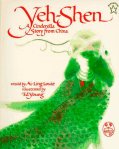
 Yeh-Shen was the orphan daughter in her stepmother’s home, but the stepmother favoured her own daughter. Yeh-Shen’s friend, the fish, would come out of the water, rest on the shore, and she should feed it from her scarce resources. Her stepmother put on Yeh-Shen’s coat, lured out the fish, and killed it. As Yeh-Shen grieved, an old man appeared and told her to retrieve the bones, for they had power to grant wishes. Yen-Shen then wished on the bones for food. When the spring festival arrived (where young men and women could find partners), Yeh-Shen was not allowed to go. The bones of the fish made her an azure gown, a kingfisher feather cloak, and shoes of solid gold. When it looked like her stepmother would recognize her, she fled, leaving behind one gold slipper. In searching for his “bride”, the king noticed Yeh-Shen’s tiny feet, and when she tried on the slipper, her spring festival clothes reappeared on her. Ta da!
Ai-Ling Louie, illustrated by Ed Young, ©1982, Philomel Books, 978-0-399-21594-0
Comparison
Using a Venn diagram, students can prepare a chart comparing how this Cinderella story is the same as, and different from, the European version. It is your decision whether to read them a picture book, or count on their knowledge of the Disney version.
A simple method is to ask students to first write a rather pedestrian opening sentence such as: This is a comparison of the classic European Cinderella with the Yeh-Shen version; then they choose and write about at least three ways in which they are similar. Begin with the best idea for a comparison, end with the second best, put others between. Next, they write about at least three ways in which they are different then follow the same process of beginning with their best idea, ending with the second best, and putting the others between. They can conclude by stating whether the two stories are more similar or more different. At this point, the students can re-write the opening sentence to be more dramatic and interesting, and also write a conclusion that has pizzazz. (From analyzing the similarities and differences between the story of Yeh-Shen and Cinderella we may conclude that the tale began in China.) Voila! It may not be amazing, but it is serviceable.
Mutilating the Body
Another mini-research project topic could be customs that involve altering the body to create “beauty”, such as the custom of foot-binding in China. Customs, such as foot binding, actually distort the body to such an extent that it can even be crippling. A discussion with students, about potentially not making any changes to their body that cannot be reversed would be fruitful.
- Extending the ears (Inca, Tutankhamen, Africa, etc.)
- Tiny feet (China)
- Elongated necks (some African tribes where if the rings are removed the person suffocates).
- Teeth blackening (in Elizabeth I’s court she had eaten so much sugar that her teeth were black, so some women as a fashion statement blackened their teeth)
- Cranial binding (the head to create a shape. Very common in Incas)
- Facial Scarring (Sudan, Papua New Guinea, Aboriginal tribes in Australia, Karo people of Ethiopia)
- Teeth sharpening (Mayan, Vietnamese, Balinese, Africa)
- Lip plates (Ecuador, Sudan, Ethiopia, Central America)
CBS Storybreak: Yeh-Shen
CBC Storybreak has a really quite nice fully animated version of Yeh-Shen based on the book, but with more elaborated characters.
For 8 creative writing ideas, click Yeh Shen: A Cinderella Story from China to download.
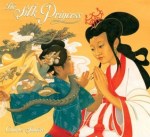 Hsi-Ling Chi is the daughter of the Emperor and is rarely noticed. The Emperor has been seeking for a cloth worthy of his nobility. One day, Hsi-Ling Chi notices a cocoon has fallen in her mother’s tea and is unraveling. They play a game to see how long it is and the little girl ties it around her waist. She goes out past the stone garden, past the spider, outside the palace, to the holy mountains where a dragon threatens her. Along the way she loses the thread, but meets a hermit who shows her how the silk can be woven, and offers to take her home. She falls asleep, wakens to no silk cloth but still with the silk thread tied around her waist—the whole thing was a dream. When she gets back her mother hears her story and thinks, “Hmm? Is this possible?” She summons the royal weavers and the rest is history.
 A classic Chinese folktale, of a man who owned a horse and at each turn of fate believed that things were neither as good, nor as bad, as they might seem.
 In Japan, the oldest and wealthiest man in the village lives on the hill in his rice farm. In the village below, villagers are getting ready for a festival. Suddenly he senses a problem, and when he sees the waters recede realizes a tsunami is coming. He cannot get down to the village to warn them in time so he needs to draw the villagers to him. As a desperate act, he sets his crop on fire. The villagers rush up the hill to help put out the fire, and they are all saved.
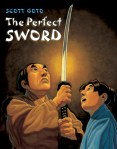 Masa and his apprentice Michio make a “perfect sword” and then seek the person worthy of it. Each candidate is rejected as they hear from the warrior, the swordsman, the noble, and so on. They need someone kind, who doesn’t automatically reach for a sword to solve problems, who wants to help others, and who is noble. Like a fairy tale, but this one takes FOUR tries, they eventually find the right candidate. Satisfied, they turn to making the next “perfect sword.”
 Ed Young is well known for his picture books. The House Baba Built is more in the nature of a memoir of his childhood in the house his father built in Shanghai in which the family lived during World War II. We learn about the war, school, family activities in the house, taking in refugees including a Jewish family, food shortages, being unable to fill the pool…all through his eyes as a child. You can take just a part of this book for a rich study of many different topics.
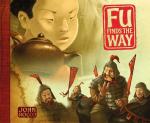 Fu is planting rice and is bored enough not to be doing it well, in neat rows. When he is rebuked, he throws a rice plant out of the paddy into the path of the warrior, Chang. The insulted warrior challenges him to a duel. Fu finds the sword Master and asks for help in getting ready. Through the night, all the Master does is teach him how to make and pour tea – with Purpose, Flow, and Patience. When Fu faces Chang in the morning he faces him with a teapot and suggests a pot of tea. Chang’s followers laugh at the boy, but Chang says, “There’s always time for tea.”
 In the country, in modern Japan, a little old couple lives quietly. The man says he misses his “rounds” (we don’t know what they are) and his wife makes him some candies so he can go into town on his bicycle and repeat what he used to do. He bicycles through busy streets to where the park used to be and sets up a little theatre. He recalls to himself what it was like to entertain crowds of children with his Japanese tales until television came. Coming out of his reminiscence he sees a crowd has gathered to hear these traditional tales and he gives out the candy his wife made.
 The legend behind the Blue Willow is the story of a girl who falls in love with a poor fisherman. Her father places obstacles in their path. First he says to wait until the fall, then until he finds money in the street then when a rainbow appears over the pavilion. Finally the daughter dies while looking for her lover at sea during a storm. When her fisherman lover discovers her death, he cries out in anguish and is killed by the villages mistaking him for a screaming tiger. The rainbow and dove appear over the daughter’s pavilion. The father commissions the plate in memory of the two lovers.
 Diana Cruchley